Research
Table of Contents
Research Overview #
My research is in theoretical nuclear astrophysics, with a focus on understanding the origins of heavy elements in the universe through nucleosynthesis processes occurring in extreme astrophysical environments such as neutron star mergers and core-collapse supernovae.
I combine nuclear theory, astrophysical simulations, and machine learning to connect properties of exotic nuclei with observable r-process signatures. My work uses nuclear mass models, beta-decay and reaction-rate calculations, reaction-network modeling, and data-driven methods to understand how nuclear uncertainties shape the elemental abundances observed in the Solar System and in metal-poor stars.
Research Interests #
Nucleosynthesis And R-Process Observables
The rapid neutron-capture process (r-process) produces roughly half of the elements heavier than iron, including gold, platinum, thorium, and uranium. It occurs in extremely neutron-rich environments, where nuclei capture neutrons faster than they undergo beta decay. The resulting abundance pattern depends on both the astrophysical conditions and the nuclear properties that govern these reactions. I compare predicted patterns with the Solar System abundance pattern and observations of metal-poor stars to investigate the conditions that produced them.
Metal-Poor Stars And Enrichment Fingerprints
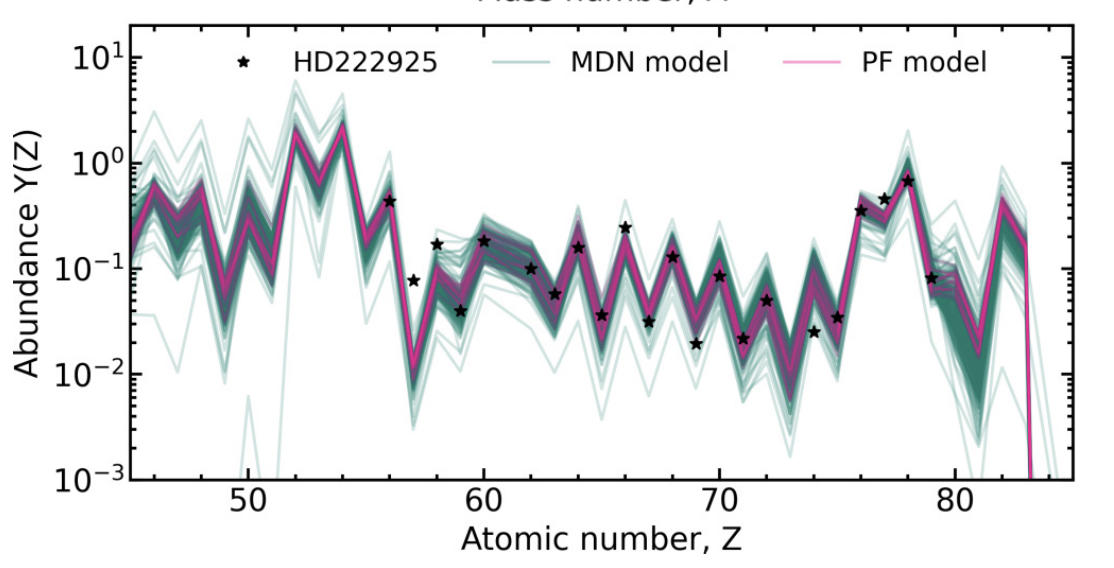
Metal-poor stars formed from gas containing relatively little iron and other elements heavier than helium. Their compositions preserve traces of earlier nucleosynthesis and offer clues about the stars and explosive events that enriched their birth material. I simulate element production under different astrophysical and nuclear-physics assumptions and compare the results with observed abundance patterns, including that of HD 222925, to identify plausible enrichment histories and constrain the nuclear inputs.
Exotic Nuclear Properties
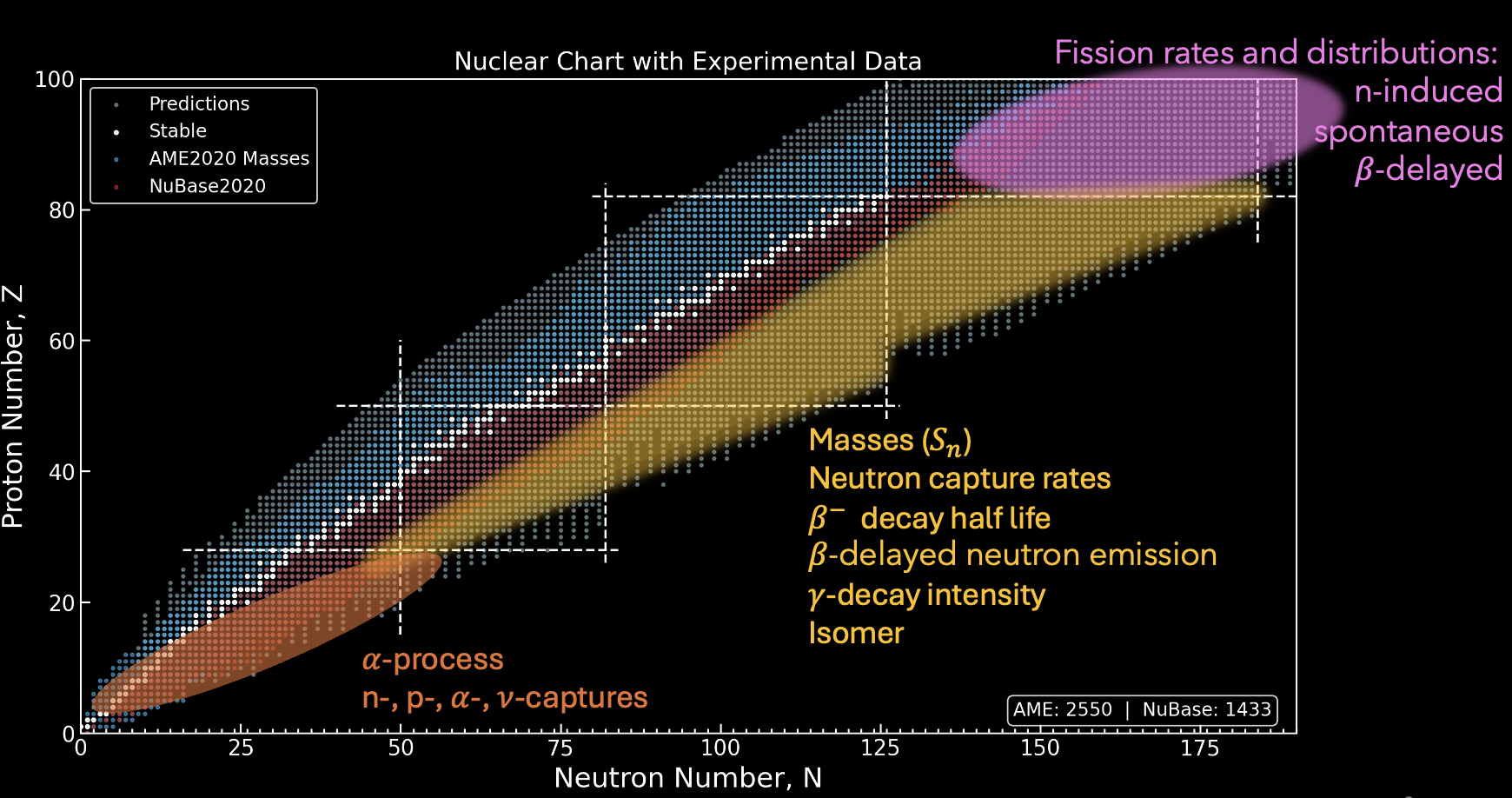
Many nuclei important to heavy-element production are short-lived and difficult to study directly in the laboratory, yet they are created in extreme astrophysical environments. Their masses and decay rates shape nucleosynthesis pathways and final element abundances. I develop and evaluate predictions for these exotic nuclei, including machine-learning models of their masses and beta-decay half-lives. I use these predictions in r-process simulations and compare the resulting abundance patterns with astrophysical observations to constrain nuclear properties beyond current experimental reach.
Nuclear Reaction Networks
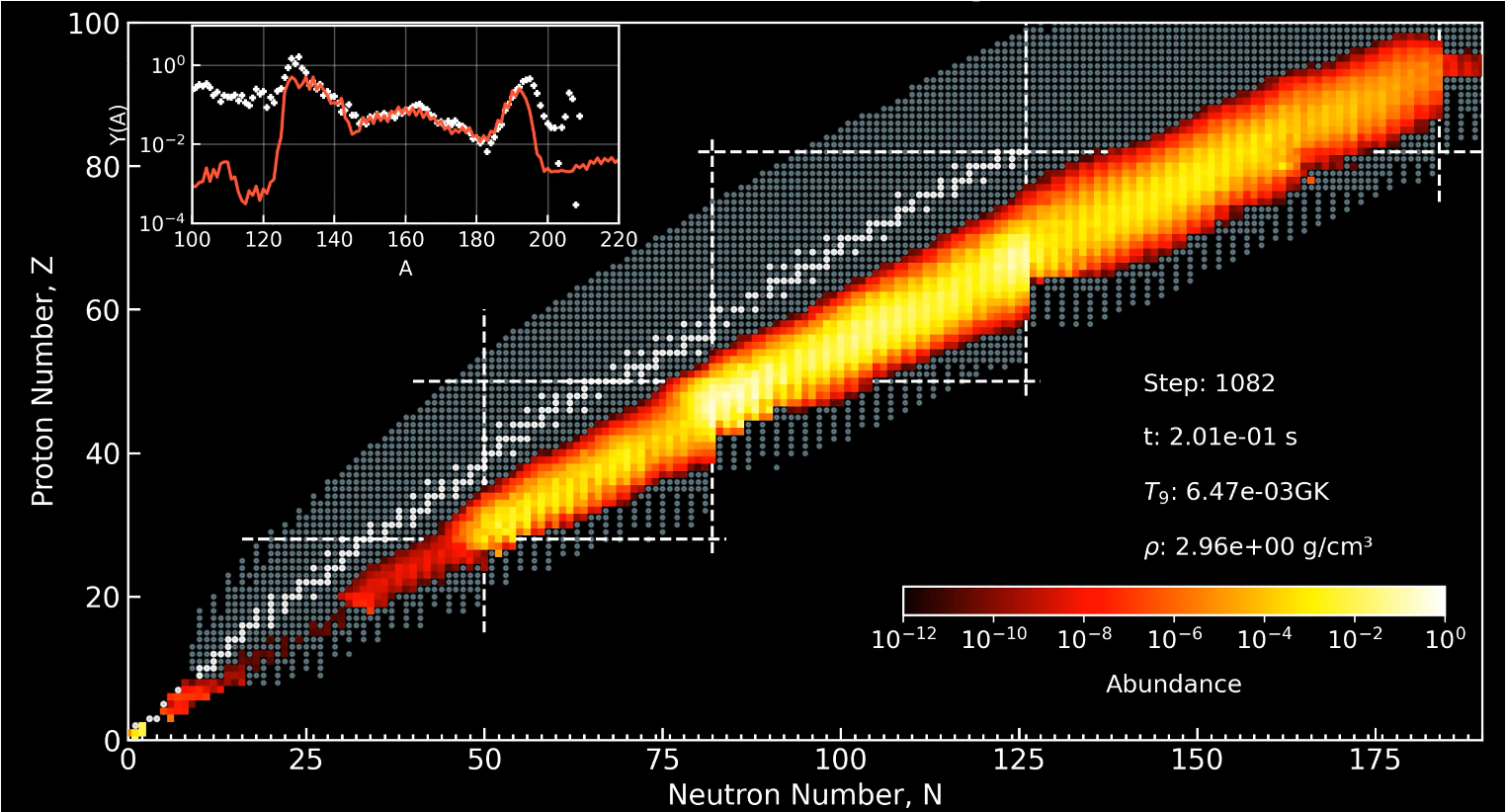
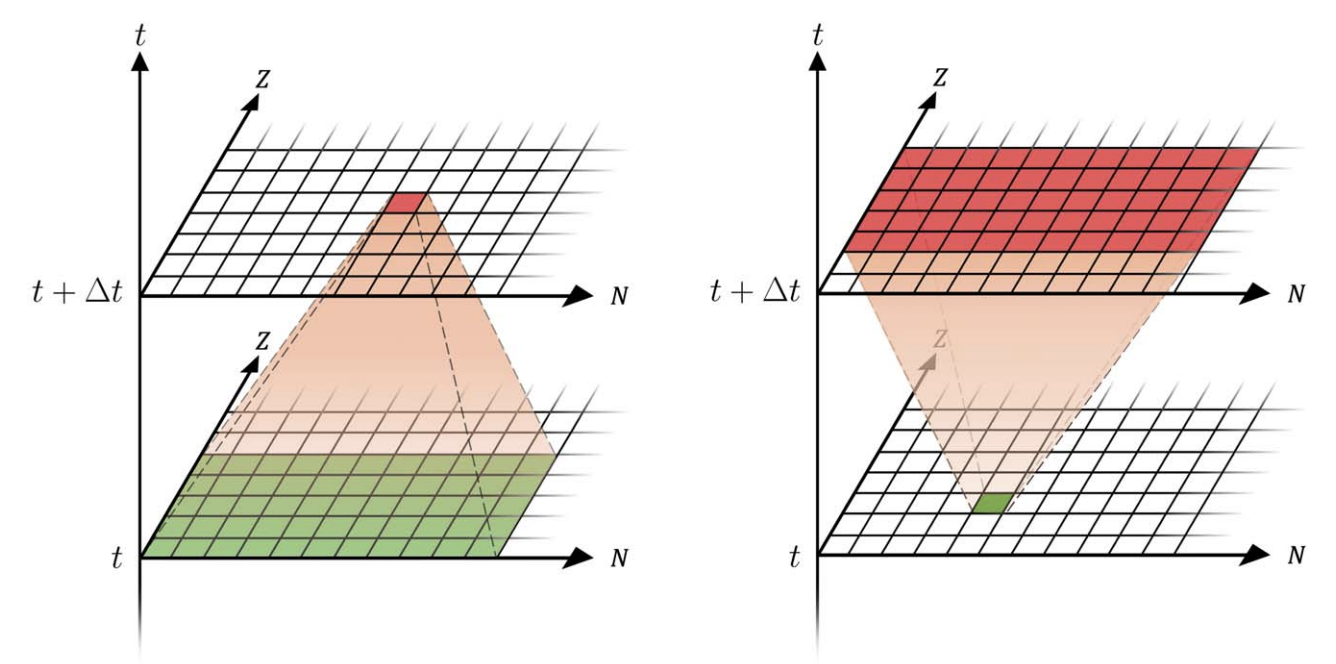
Nucleosynthesis networks represent how thousands of nuclei are connected through neutron capture, photodissociation, beta decay, alpha decay, and fission. These reactions compete as explosive ejecta expand and cool. To understand how each nucleus contributes to the evolving abundance pattern, I developed GrRproc, a graph-based r-process network that tracks material flow between nuclei over successive time steps. This helps identify which reactions and pathways govern the production of specific elements.
Machine Learning And Uncertainty Quantification
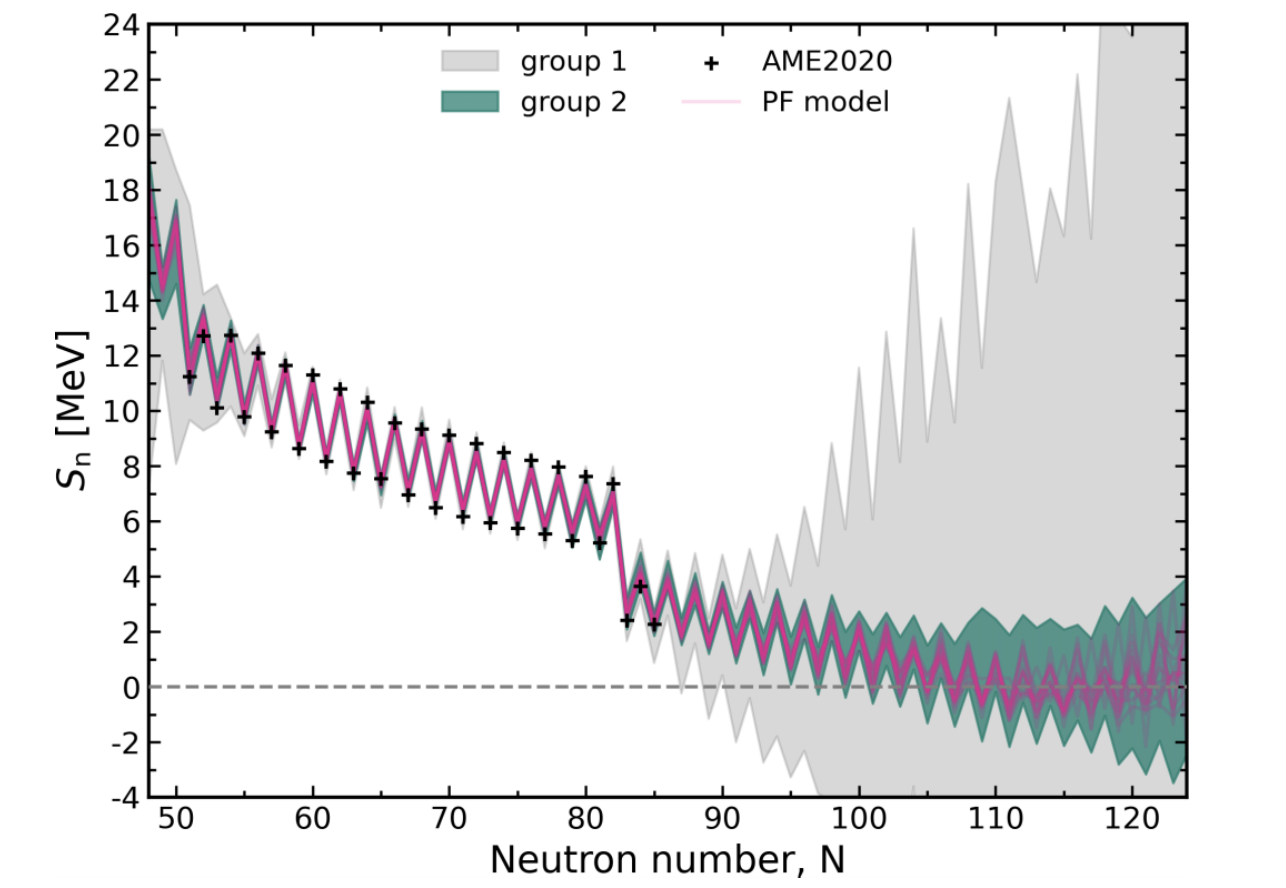
Measurements of nuclei far from stability are scarce, and different nuclear models can produce substantially different predictions. I use Mixture Density Networks to represent model predictions and multi-objective optimization to identify solutions on the Pareto front. By comparing these predictions with astrophysical observables, I assess and constrain uncertainties in nuclear properties and their impact on nucleosynthesis.
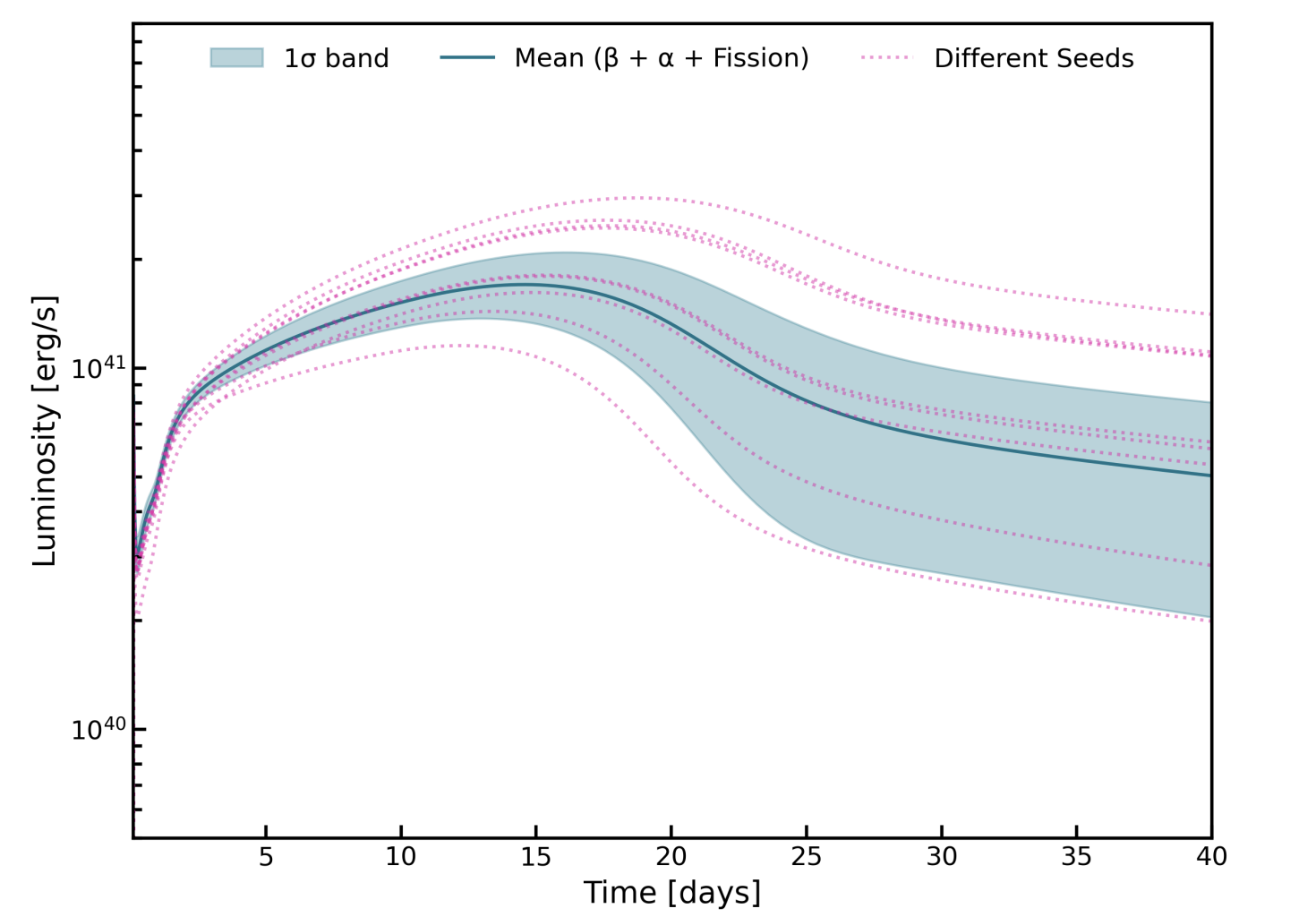
Modeling Kilonova Observables
Neutron-star mergers eject hot, neutron-rich matter whose radioactive decay powers a kilonova. I use simulated light curves to investigate how uncertainties in nuclear properties, particularly beta-decay rates, affect the predicted brightness over time.